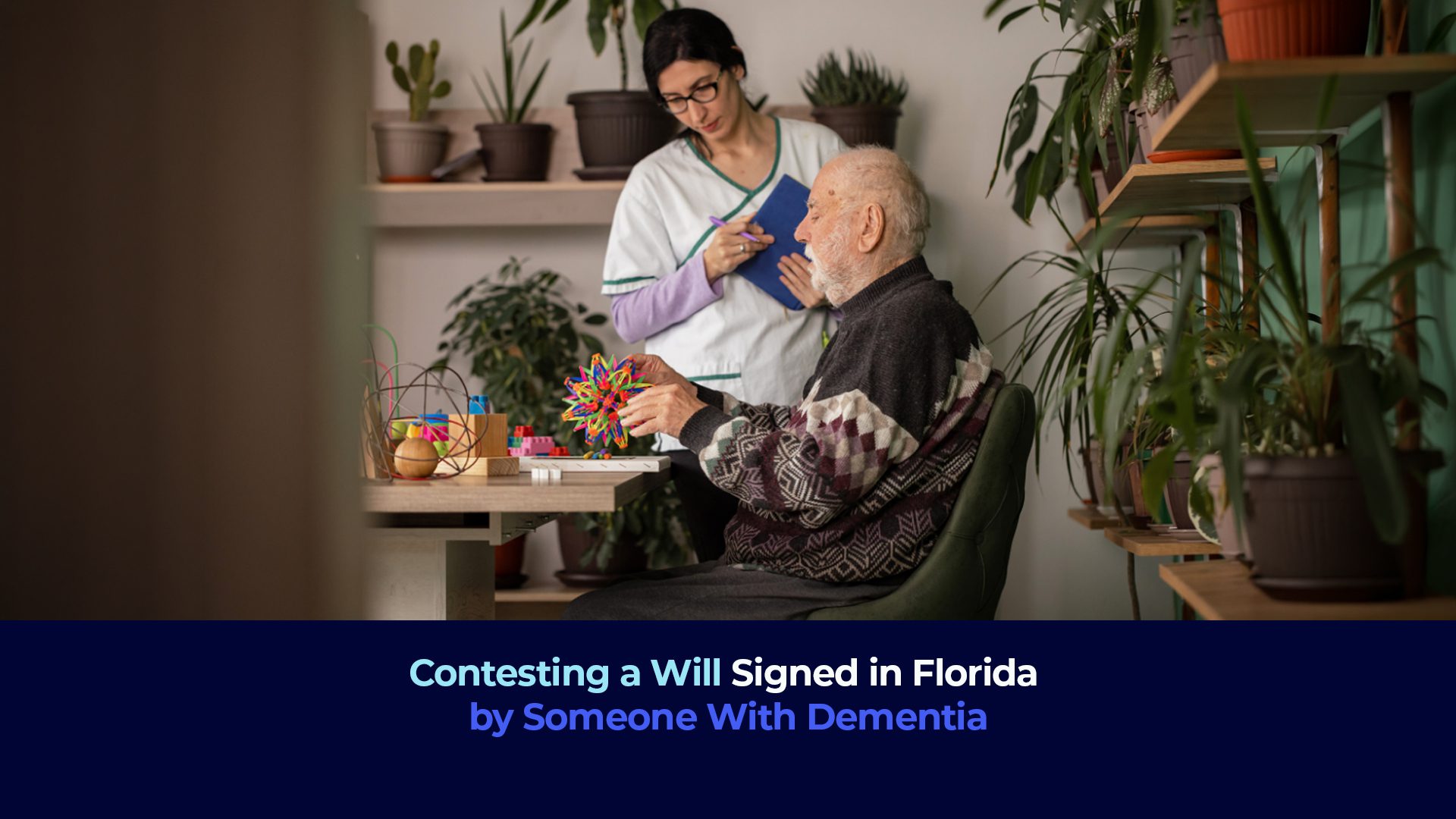
Contesting a Will Signed in Florida by Someone With Dementia
Quick Read Summary (TLDR)
Contesting a will in Florida based on a dementia or Alzheimer’s diagnosis requires proving that the decedent lacked “testamentary capacity” at the exact moment the document was signed. While a medical diagnosis of dementia is influential, Florida law considers whether the individual understood their assets, their heirs, and the practical effect of the will during a “lucid interval.” Success in these cases often hinges on gathering extensive evidence, including medical records, expert testimony, and witness accounts from the time of execution. Because Florida courts generally presume a will is valid, challengers face a high legal burden to successfully overturn the document.
Success in contesting a will in Florida generally requires the services of an experienced Florida probate litigation attorney. Contact South Florida Law for representation on (954) 900-8885 or reach out to us via our contact form.
When a person passes away and leaves behind a will that seems out of character, family members may wonder whether dementia, Alzheimer’s, or another cognitive condition affected the decision. In Florida, contesting a will on the grounds that the person who signed it lacked the mental ability required by law is difficult, but possible. These cases are complex, and success depends on careful evidence and a clear understanding of Florida probate rules.
What Florida Law Requires for a Valid Will
Under Section 732.501 of the Florida Statutes, any person who is of sound mind and at least 18 years old (or an emancipated minor) may make a will. The phrase “sound mind” is the heart of every capacity-based will challenge. Florida courts have developed a test, often called testamentary capacity, that asks whether the person signing the will could mentally understand three things: the nature and extent of the property being distributed, the identity of the people who would naturally inherit (such as a spouse, children, or close relatives), and the practical effect of signing the document.
If the person who signed the will could not grasp these basic concepts at the moment of signing, the will may be invalidated by a Florida probate court.
A Dementia Diagnosis Alone Is Not Enough
One of the most important things to understand is that a diagnosis of dementia or Alzheimer’s disease does not automatically mean the person lacked testamentary capacity. Cognitive conditions exist on a spectrum, and many individuals experience moments of clarity even after a diagnosis. Florida courts recognize that someone with mild or even moderate dementia may still have the mental ability to create a valid will.
Florida law also recognizes a concept called a “lucid interval.” This means that a person who normally suffers from cognitive impairment may still execute a valid will during a period when their mind is clear. A lucid interval can apply even when a court has previously declared the person incompetent, although in that situation Florida law presumes incapacity, and the burden shifts to those defending the will.
For example, an elderly woman diagnosed with moderate Alzheimer’s may have stretches of confusion in the morning but engage in clear, thoughtful conversation in the afternoon. If she signed her will during such a clear period, the document could still be upheld.
“Florida law… recognizes a concept called a ‘lucid interval.’”
Who Can Challenge a Will
Not just anyone can contest a Florida will. Only an “interested person” has legal standing to file a challenge. This typically includes named beneficiaries, heirs who would inherit under Florida’s intestacy laws if there were no will, nominated personal representatives, and sometimes creditors of the estate.
Strict Deadlines Apply
Timing is critical. A Petition for Revocation of Probate must generally be filed within 90 days after being served with a Notice of Administration. If formal notice is served before the will is admitted to probate, the deadline can shrink to just 20 days. Missing these windows can permanently bar a challenge, which is one reason it is highly recommended that concerned family members consult an experienced Florida probate attorney as soon as questions arise.
Building the Evidence
Because Florida law presumes that the person who signed the will had capacity, the party contesting the will carries the burden of proof. Successful challenges typically rely on a combination of evidence, including medical records showing diagnoses, prescriptions, and physician notes; testimony from caregivers, friends, and family members who observed the testator’s behavior near the time of signing; and notes from the drafting attorney about the testator’s clarity and understanding.
Florida is also unique in recognizing a doctrine sometimes called “partial insanity,” which allows a will to be invalidated when a delusion or impaired judgment specifically affected the decisions made in the document. Contemporaneous notes kept by family members and evidence of unusual behavior, such as sudden changes in long-standing estate plans, can be especially persuasive.
The Importance of an Attorney When Contesting a Will
Will contests based on dementia can be highly fact-specific legal processes. Medical records must be gathered, witnesses interviewed, and deadlines tracked carefully. Families who suspect that a loved one’s will does not reflect their true wishes should beware of navigating the probate court system alone. It is highly recommended that anyone considering a will challenge speak with an experienced Florida probate litigation attorney who can evaluate the facts, preserve key evidence, and guide the family through every step of the process.
South Florida Law
Finding the right South Florida-based attorney is the first step that families can take when contesting a will during the probate process.
South Florida Law is an experienced local Florida law firm with a track record of success in both estate planning and probate litigation. With us you get the best of both worlds: all the best qualities of a boutique-sized firm, including attention to detail and personalized service, while benefitting from the resources of a large firm.
If you are contesting a will signed by someone with dementia, contact us today by calling (954) 900-8885 or via our contact form.