Determining Undue Influence Over the Elderly in Florida Probate Litigation
Quick Read Summary (TLDR)
When an elderly person passes away and leaves an estate to a caregiver or other trusted individual, family members sometimes question whether the decision was truly voluntary. Florida probate law provides a framework for challenging wills and trusts that may have been the result of undue influence, including manipulation or coercion. The landmark 1971 Florida Supreme Court decision in In re Estate of Carpenter established specific factors courts use to determine whether undue influence occurred. Additional factors are also currently considered in Florida probate litigation.
If you are facing a manipulative caregiver who exerted undue influence over a deceased loved one, do not allow them to take what is not rightfully theirs without a legal challenge. Contact South Florida Law for representation by calling (954) 900-8885 or reach out via our contact form.
Understanding Undue Influence in Florida
“Undue influence” occurs when someone uses their position of trust to manipulate a vulnerable person into making estate planning decisions that benefit the manipulator rather than reflecting the true wishes of the person making the will. This type of exploitation often targets elderly individuals who depend on others for daily care and support.
Under Florida Statute 733.107, a presumption of undue influence arises when three elements are present. First, the accused person must stand to receive a substantial benefit under the will or trust. Second, that person must have had a confidential relationship with the deceased. Third, the beneficiary must have been active in procuring the will or trust. Once these elements are established, the burden of proof shifts to the accused beneficiary to prove that no undue influence occurred.
The Seven Carpenter Factors
The Florida Supreme Court identified seven factors to help determine whether active procurement occurred. These factors serve as warning signals that courts examine when evaluating undue influence claims.
The factors include whether the beneficiary was present when the will was executed and whether the beneficiary was present when the deceased expressed a desire to make a will. Courts also consider whether the beneficiary recommended the attorney who drafted the will and whether the beneficiary knew the contents of the will before it was signed. Additional factors include whether the beneficiary gave instructions to the drafting attorney, whether the beneficiary secured the witnesses to the will, and whether the beneficiary kept the will after its execution.
These factors are not mandatory or exclusive. A court may find undue influence even if not all the factors are present, and it may consider additional circumstances beyond this list.
Three Additional Factors in Probate Litigation
Florida courts now recognize at least three other indicators of active procurement beyond the original Carpenter factors. The first is isolating the deceased and disparaging family members. When a beneficiary purposefully cuts off an elderly person from family and friends, courts view this behavior with suspicion.
The second additional factor is mental inequality between the deceased and the beneficiary. When a caregiver possesses significantly greater mental acuity than the person in their care, the opportunity for manipulation increases substantially.
The third factor is the reasonableness of the will or trust provisions. Dramatic departures from what the deceased previously expressed or from what would be expected based on family relationships may indicate undue influence.
Warning Signs of Caregiver Undue Influence
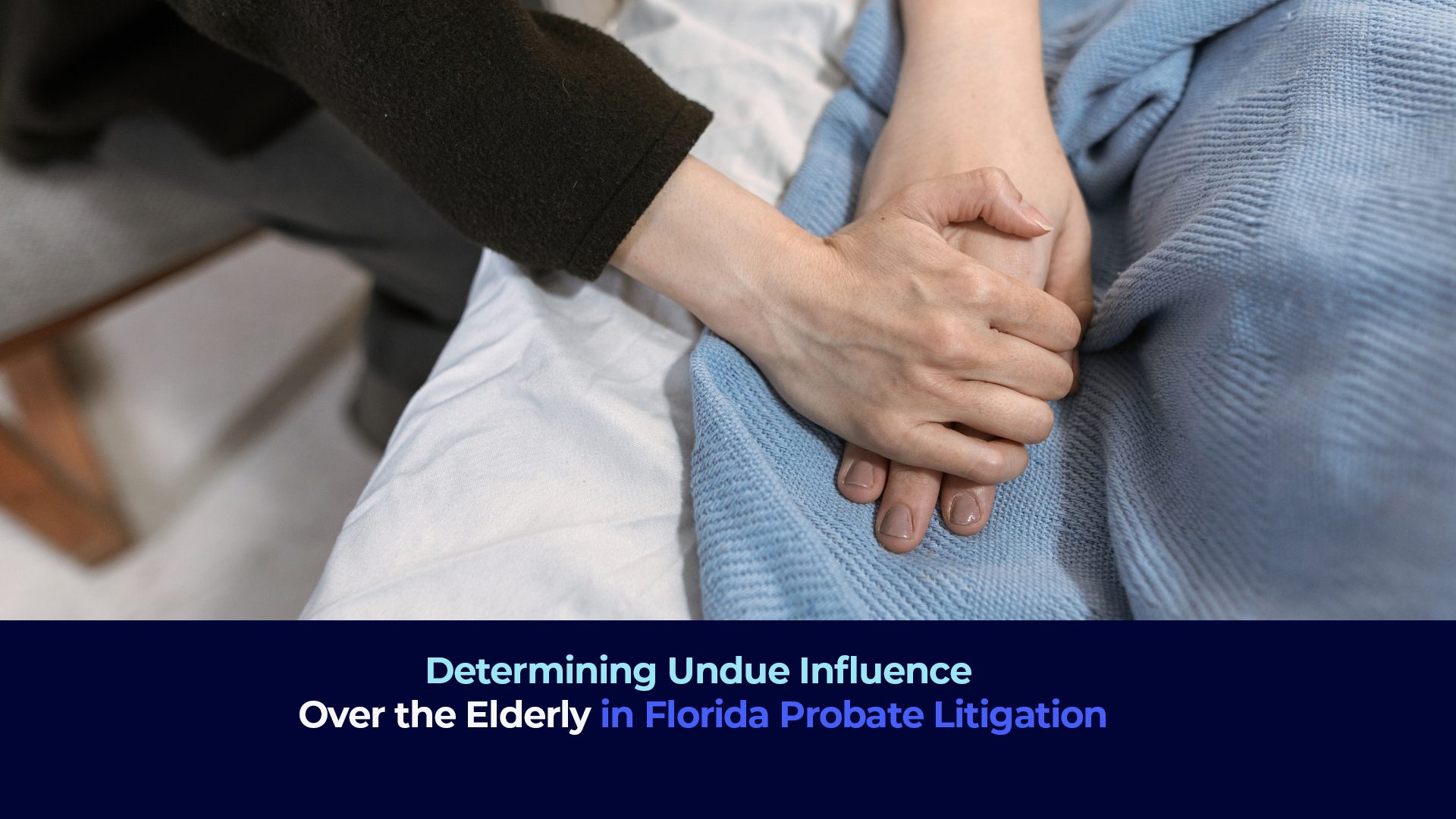
Families should watch for certain red flags that may indicate a caregiver is exerting undue influence over an elderly loved one. Sudden and unexplained changes to estate plans deserve close attention, particularly when a caregiver or new acquaintance quickly becomes a major beneficiary.
Isolation is a common tactic. An unscrupulous caregiver may restrict visits from family members, limit telephone calls, or monitor all communications to prevent outside interference. When combined with the caregiver attending every meeting with attorneys or financial advisors, these behaviors suggest the possibility of undue influence.
Other warning signs include changes made during periods of illness or emotional distress, especially when the elderly person lacks the capacity to fully understand the consequences of their decisions. Withholding comfort measures or medications to pressure a suffering person into changing estate documents represents particularly troubling conduct.
“An unscrupulous caregiver may restrict visits from family members, limit telephone calls, or monitor all communications to prevent outside interference.”
The Importance of an Attorney
Florida law recognizes that proving undue influence is difficult because manipulative conduct typically occurs in private, away from witnesses. The Carpenter presumption exists specifically to address this challenge by shifting the burden of proof once certain facts are established.
Families who suspect that an elderly loved one was subjected to undue influence by a caregiver should consult with an experienced Florida probate litigation attorney. These cases require careful investigation of estate planning records, medical records, and financial documents. An attorney familiar with Florida’s undue influence framework can evaluate the evidence and advise whether grounds exist to challenge a will or trust in probate court.
South Florida Law
Finding an experienced Florida probate Litigation attorney can be a challenge. Attorneys from larger firms often pass work to inexperienced juniors and cannot dedicate the attention to detail needed due to the sheer volume of their case load. Small firms do have the ability to dedicate more time to your case, but often do not have the resources to endure long and complex probate litigation.
At South Florida Law, you get the best of both worlds: a legal partner with the attention to duty and availability of a boutique firm and the resources of a big law firm.
If your family is facing a situation of undue influence where a loved one passed away after being manipulated into making inheritance decisions that they otherwise would not have agreed to, call South Florida Law for legal representation at (954) 900-8885 or reach out via our contact form.