How Homeowners can undo A Florida Foreclosure Auction Win
Quick Read Summary (TLDR)
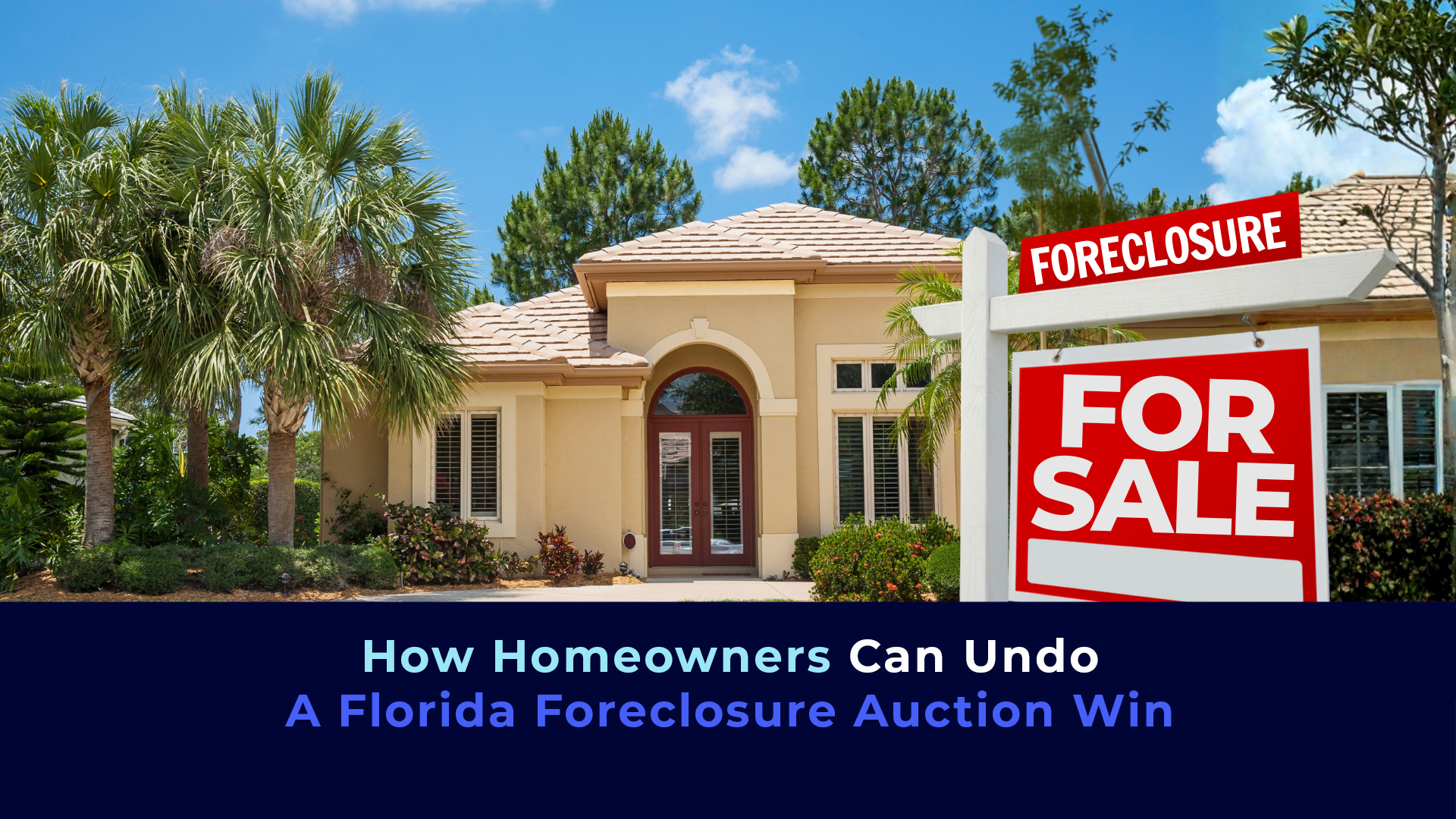
In Florida, winning a foreclosure auction is merely the first step, as borrowers retain a “right of redemption” that allows them to pay off debts and invalidate the sale until the clerk of court files the certificate of sale.
Bidders must be aware that federal liens can extend redemption periods well beyond the typical auction timeline, and the final judgment itself may dictate specific, extended deadlines. Consequently, investors should perform thorough due diligence and consult with legal professionals, as the property transfer is not finalized until the certificate of title is issued.
To discuss a foreclosure auction purchase or any other real estate matter with an experienced attorney, call us at (954) 900-8885 or reach out through our contact form.
Winning a foreclosure auction in Florida can feel like crossing the finish line. In reality, the winning bid is only one step in a legal process that is not complete until the clerk of court issues key documents. Florida’s right of redemption, found in Section 45.0315 of the Florida Statutes, gives the foreclosed borrower one last chance to pay off the debt and keep the property. Exercised at the right moment, that right can erase an auction victory entirely. Understanding exactly when redemption ends is essential for anyone planning to bid.
What the Right of Redemption Means in Florida
Under Florida Statute 45.0315, the borrower, or the holder of any subordinate interest such as a second mortgage lender, may redeem the property by paying the full amount owed under the final judgment of foreclosure. That payment includes principal, interest, costs, and reasonable attorney fees. The deadline is the later of two events: the filing of the certificate of sale by the clerk of court, or the deadline stated in the judgment itself. After that point, the statute is blunt. There is no right of redemption.
It is worth clearing up a common misconception. Roughly half of the states give homeowners a statutory redemption period that runs for months after the foreclosure sale. Florida does not. Once the certificate of sale is filed, redemption is gone for good in a typical mortgage foreclosure. That rule makes Florida friendlier to auction buyers than many other states. The danger lies in the narrow windows that remain open.
The Gap Between the Winning a Foreclosure Auction and the Certificate of Sale
The first pitfall is timing. Under Florida Statute 45.031, the clerk conducts the public sale, collects a deposit from the high bidder, and then files a certificate of sale. Clerks usually file the certificate quickly, often the same day or the next business day. Until that filing actually happens, however, the borrower can still redeem.
Consider an example. An investor wins an online auction at 10AM. At 2PM, before the clerk files the certificate of sale, the borrower’s family delivers the full judgment payoff to the clerk. Under the statute, the redemption is valid and the sale is undone.
When an auction sale is undone, the investor’s funds are returned, and the property goes back to the borrower. Florida courts have enforced this rule strictly, even where the clerk was slow to issue the certificate. A bidder who has already lined up contractors, financing, or a resale buyer loses the deal along with any expected profit.
“When an auction sale is undone, the investor’s funds are returned, and the property goes back to the borrower.”
The Final Judgment Can Extend the Redemption Deadline
The second pitfall hides in the court file. The statute measures the redemption deadline by the later of the certificate of sale or the date specified in the judgment. Most final judgments do not extend redemption beyond the sale, but some do.
If a judgment sets a redemption deadline that falls after the auction date, the borrower may redeem through that entire period, even after the certificate of sale is filed. It is highly recommended that bidders read the final judgment of foreclosure before the auction, since the judgment controls the terms of the sale.
The Certificate of Sale Is Not the Certificate of Title
Even after the redemption window closes, the auction winner does not yet own the property. Any party may object to the sale within ten days after the certificate of sale is filed. Only when that objection period passes without a challenge, or the court resolves any objection, does the clerk issue the certificate of title that transfers ownership.
This waiting period exists for objections to the sale process rather than for redemption, but it adds another stretch of time during which the winning bidder’s money is committed while the outcome remains uncertain.
The Federal Government’s Post-Sale Redemption Right
The third pitfall comes from federal law rather than Florida law. When the United States is named as a junior lienholder in the foreclosure case, often because of an IRS tax lien against the borrower, the federal government keeps a right of redemption that survives the Florida sale.
For a federal tax lien, the government may redeem the property for up to 120 days after the sale. For other federal interests, the redemption right can last up to one year. This is the closest thing a Florida auction buyer faces to a true post-sale redemption period, and it can cloud plans to renovate or resell during that window.
How Auction Buyers Can Protect Themselves
Careful preparation reduces each of these risks. Before bidding, it is highly recommended that a prospective buyer order a full title search to uncover federal liens, review the final judgment for any extended redemption deadline, and confirm the payment deadlines set by the local clerk. Properties at Florida foreclosure auctions are sold as is, and the clerk does not guarantee clear title.
After the sale, buyers are wise to wait for the certificate of title, and for any federal redemption period to expire, before investing heavily in the property. Because these issues involve strict deadlines and an interplay between state and federal law, working with an experienced Florida real estate attorney is far safer than attempting to navigate a foreclosure purchase alone.
South Florida Law
Foreclosure auctions can offer real opportunities, but the right of redemption and related title rules leave little room for error. The experienced real estate attorneys at South Florida Law advise investors, lenders, and property owners on foreclosure sales, title questions, and real estate transactions throughout Florida. To discuss a foreclosure purchase or any other real estate matter with an experienced attorney, call us at (954) 900-8885 or reach out through our contact form.