How Florida Courts Handle Lost Wills and Copies of Wills in Estate Disputes
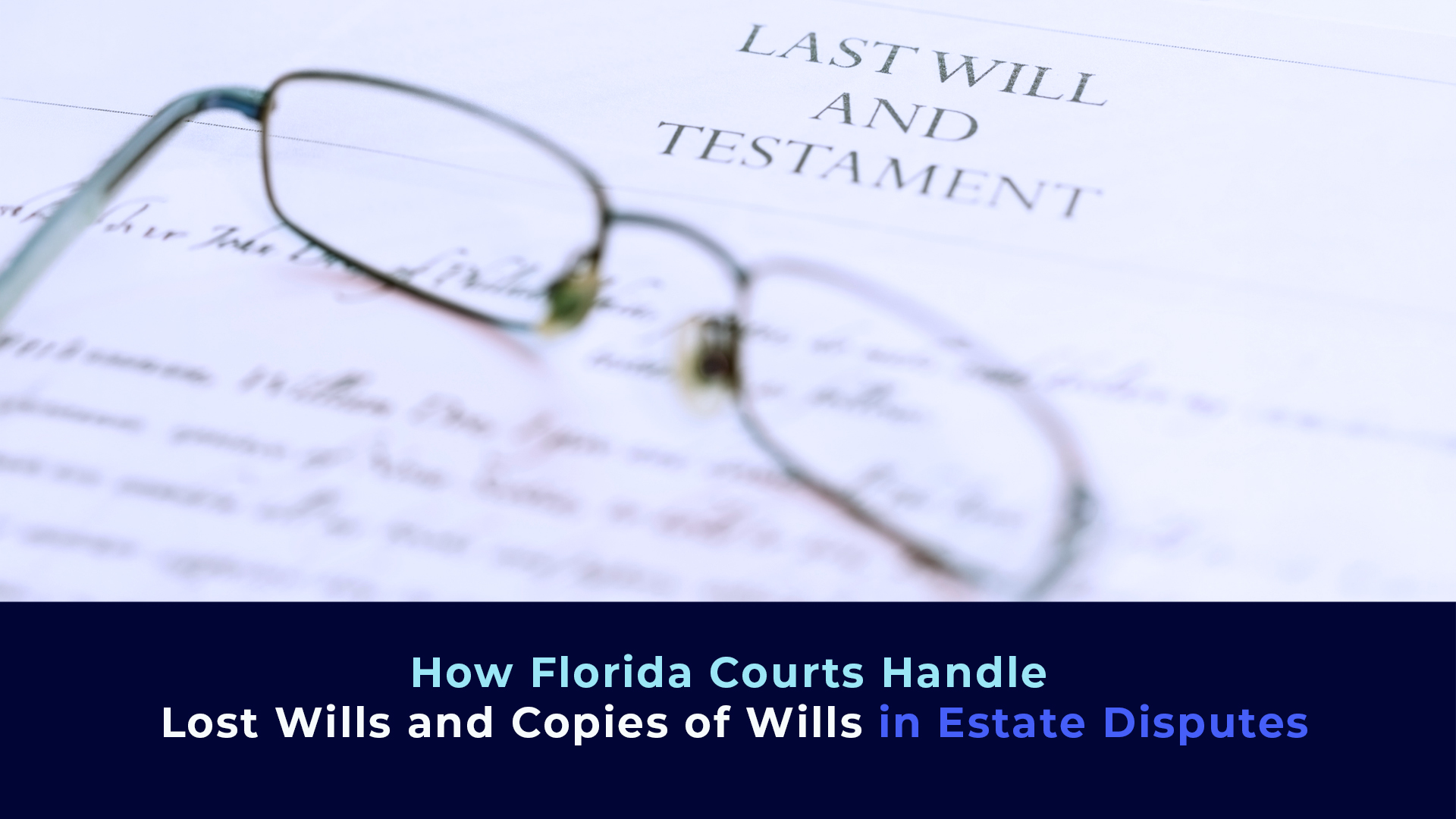
When a loved one dies and the original will cannot be found, families are often surprised to learn that a photocopy may not settle the estate. Florida courts handle lost wills and copies of wills under strict rules in Florida Statute 733.207. They also start from a presumption that the person who made the will destroyed it on purpose. Knowing these rules can mean the difference between honoring a loved one’s wishes and the estate passing as if no will existed.
Why Missing Original Wills Raise Red Flags
Florida Statute 732.901 requires anyone holding an original will to deposit it with the clerk of court within 10 days of learning of the death. When a known original cannot be found after death, the law presumes the testator (the person who made the will) destroyed it to revoke it. Under Florida Statute 732.506, burning, tearing, or otherwise destroying a will with that intent revokes it.
The person offering the will must overcome this presumption with solid evidence that the testator did not destroy it to revoke it. Some Florida courts apply the presumption only when the will was last in the testator’s possession.
Proving What a Lost Will Said
Overcoming the presumption is only half the battle. Under Section 733.207, the will’s contents must be proved by two disinterested witnesses, or by one if a correct copy is available. A disinterested witness has no stake in the outcome, so a beneficiary usually does not qualify. The witness must also know what the will said. Watching the testator sign is not enough. Without any copy, the task is harder because the original witnesses may have moved or died.
“[Witnesses must] know what the will said. Watching the testator sign is not enough.”
Not Every Copy Is a Correct Copy
Many families assume any version of the will is good enough. Under Florida law, a correct copy must be an identical duplicate of the signed will, such as a photocopy. A draft does not qualify, even an accurate one.
For example, suppose a daughter finds an early draft of her father’s will in his desk, but the signed original is missing. Even if the draft matches what her father told the family, it is not a correct copy. She would need two disinterested witnesses who can testify to the will’s terms.
A 2026 Florida Appeals Court Decision
After a man died, his longtime partner asked the court to probate photocopies of the man’s will and two codicils. The only witness was a friend named as a beneficiary. He admitted he never discussed the will with the man and never saw it signed. The man’s niece and nephews had once signed consent forms, but those forms were never filed and were later withdrawn. The appeals court reversed the order admitting the copies. It ruled that the witness rules apply even when the presumption of revocation does not, and that old consent forms cannot replace proper proof.
Destroying a Copy Does Not Revoke the Original
In one Florida Supreme Court case, a man tore up what he thought was the original codicil to his will, intending to revoke it. In fact, he destroyed a photocopy. The original was still with his attorney, so the attempted revocation failed. It is highly recommended that any change to a will be made with an attorney’s help.
How the Lost Will Court Process Works
Under Florida Probate Rule 5.510, proving and probating a lost will happen in one proceeding. The petition must state the will’s contents or attach a copy, and the court’s order must spell out the full terms. Formal notice must also go to the people who would inherit if the will failed. Those heirs often object, which is why lost will cases so often become estate disputes. If the will cannot be proved, the estate passes under Florida’s intestacy laws.
South Florida Law
A missing original will can turn a routine probate into a contested hearing where witness testimony and the quality of a copy decide who inherits. Acting quickly to find the original, save every copy, and identify qualified witnesses gives a loved one’s wishes the best chance of being honored.
Our attorneys at South Florida Law handle probate administration, probate litigation, and estate planning throughout South Florida, including petitions to establish lost wills. It is highly recommended that families facing a missing will seek experienced legal guidance rather than going it alone. Call (954) 900-8885 or use the contact form on our website.