The Pros and Cons of Investing as an LLCin Florida
updated 11/1/2025
Quick Read Summary (TLDR)
Investing as an LLC in Florida offers significant advantages including personal asset protection, pass-through taxation that avoids corporate-level taxes, and no state income tax. LLCs provide flexible management structures and customizable profit-sharing arrangements that make them ideal for various investment strategies.
However, investment-only LLCs face limitations including fewer tax deductions than operational businesses, mandatory self-employment taxes of 15.3%, and difficulty raising capital since they cannot issue stock. Additional drawbacks include ownership transfer restrictions requiring member approval, potential mortgage complications from “due on sale” clauses, and ongoing administrative requirements including annual filing fees.
Consult with South Florida Law to determine whether an LLC structure truly fits your specific investment goals and circumstances. Reach out to us on (954) 900-8885 or via our contact form.
Many investors in Florida consider forming a Limited Liability Company (LLC) to manage their investment activities. This business structure offers several benefits but also comes with certain drawbacks that potential investors should understand before making a decision. Understanding both sides can help investors make informed choices about whether an LLC is the right vehicle for their investment goals.
The Advantages of Investment LLCs in Florida
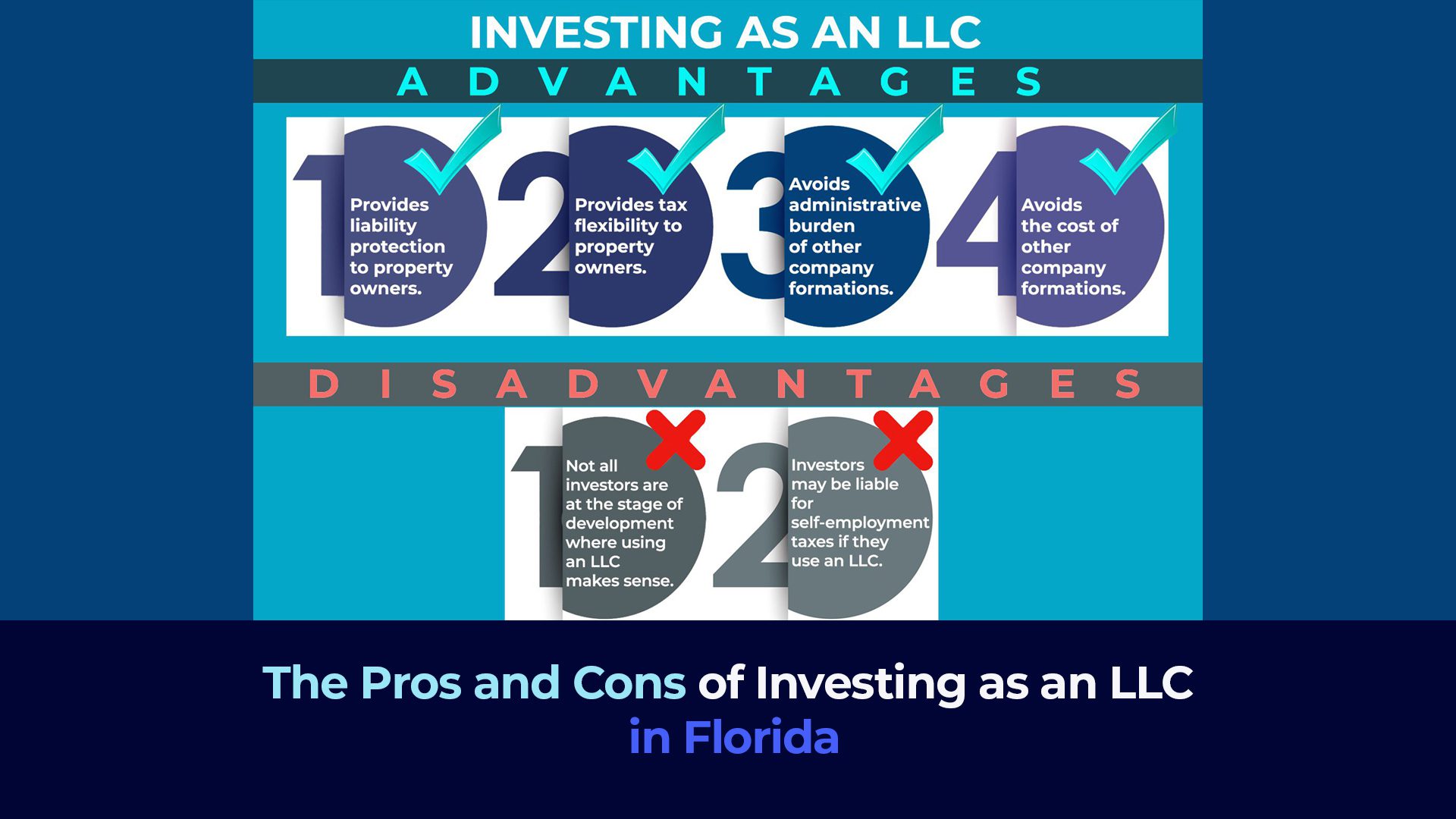
One of the most compelling reasons to use an LLC for investments is asset protection. When investors own property or make investments through an LLC, their personal assets remain separate from the business. This means that if the LLC faces legal challenges or debts, personal belongings like homes and bank accounts generally stay protected. Florida law, specifically Chapter 605 of the Florida Statutes, provides the legal framework that creates this protective barrier between personal and business assets.
Tax flexibility represents another major advantage. LLCs benefit from what accountants call “flow-through taxation” or “pass-through taxation.” This means the LLC itself does not pay federal income taxes. Instead, profits and losses pass directly to the members, who report them on their personal tax returns. Florida sweetens this deal further by not imposing state income tax on LLCs, allowing members to avoid both corporate-level taxation and state income tax. This structure helps investors avoid the double taxation that corporations experience.
The management flexibility of an LLC makes it attractive for various investment strategies. Unlike corporations that must maintain boards of directors and hold regular meetings, LLCs operate with minimal formalities. Members can choose to manage the LLC themselves or appoint managers to handle day-to-day operations. This flexibility allows investors to structure their business in ways that best suit their investment style and involvement level.
LLCs also offer profit distribution flexibility that corporations cannot match. While corporations must distribute profits based strictly on share ownership, LLCs can create customized profit-sharing arrangements. Members can agree to split profits in ways that reflect each person’s contribution, involvement, or other factors they consider important. This feature proves especially valuable when some investors contribute more capital while others provide expertise or management services.
For investors interested in real estate or other long-term holdings, LLCs provide estate planning benefits. Investors can gradually transfer ownership interests to family members or heirs, potentially reducing estate tax burdens. Additionally, LLCs accommodate non-citizen investors who want to invest in Florida properties, making them valuable tools for international investment.
The Disadvantages to Consider
Despite these benefits, using an LLC for investments comes with notable drawbacks. A critical consideration involves how the Internal Revenue Service views investment LLCs differently from operational businesses. Many tax deductions available to businesses selling goods or services do not extend to LLCs used solely for investment purposes. This limitation means investors may not realize the tax benefits they initially expected.
Self-employment taxes can create unexpected costs. LLC members must pay self-employment taxes that include both employer and employee portions of Social Security and Medicare taxes, currently totaling 15.3% of earnings. This tax burden can significantly impact investment returns, particularly for profitable ventures.
LLCs face challenges in raising capital because they cannot issue stock like corporations. Many investors prefer the familiar structure of corporate stock, and some find LLC membership interests harder to understand. This limitation can make it difficult for growing investment ventures to attract outside funding or new partners.
Ownership transfer restrictions present another hurdle. Unlike corporate shares that can be freely bought and sold, LLC membership interests typically require approval from existing members before any transfer occurs. While this protects current members by controlling who joins the business, it reduces flexibility when a member wants to exit or sell their share.
Investors who form LLCs after purchasing property should be aware of potential mortgage complications. Many mortgage agreements contain “due on sale” clauses that could require paying off the entire loan before transferring property into an LLC. This situation can create unexpected financial strain or prevent investors from obtaining the liability protection they seek.
Finally, LLCs require ongoing administrative responsibilities. Florida law mandates annual reports and filing fees, currently around $150 per year. Members must also maintain proper separation between personal and business finances, keeping different bank accounts and credit cards. Failing to maintain these formalities could jeopardize the liability protection that makes LLCs attractive in the first place.
Making the Right Choice
The decision to use an LLC for investments in Florida depends on individual circumstances, investment goals, and risk tolerance. While LLCs offer substantial benefits including asset protection and tax advantages, the limitations and ongoing requirements deserve careful consideration. Given the complexity of business formation and tax implications, investors should consult with an experienced Florida attorney before establishing an LLC. Legal professionals can evaluate specific situations and recommend whether an LLC truly serves an investor’s best interests, or whether alternative structures might prove more beneficial. Taking time to seek proper legal counsel helps ensure that investors set up their business correctly and maximize the protections and benefits available under Florida law.
South Florida Law
Making the decision to invest in a property in Florida requires the knowledge of an experienced local real estate attorney. South Florida Law has worked with resident and non-resident investors to form LLCs and trusts as investment vehicles. We also frequently advise on complex commercial and residential transactions throughout the State of Florida. This includes drafting and reviewing documents, performing title searches and providing secure escrow services.
Are you planning to invest in property anywhere in the State of Florida?
If so, call South Florida Law today on (954) 900-8885 or reach out to us via our contact form.