
Everything You Need to Know About Registered Agents
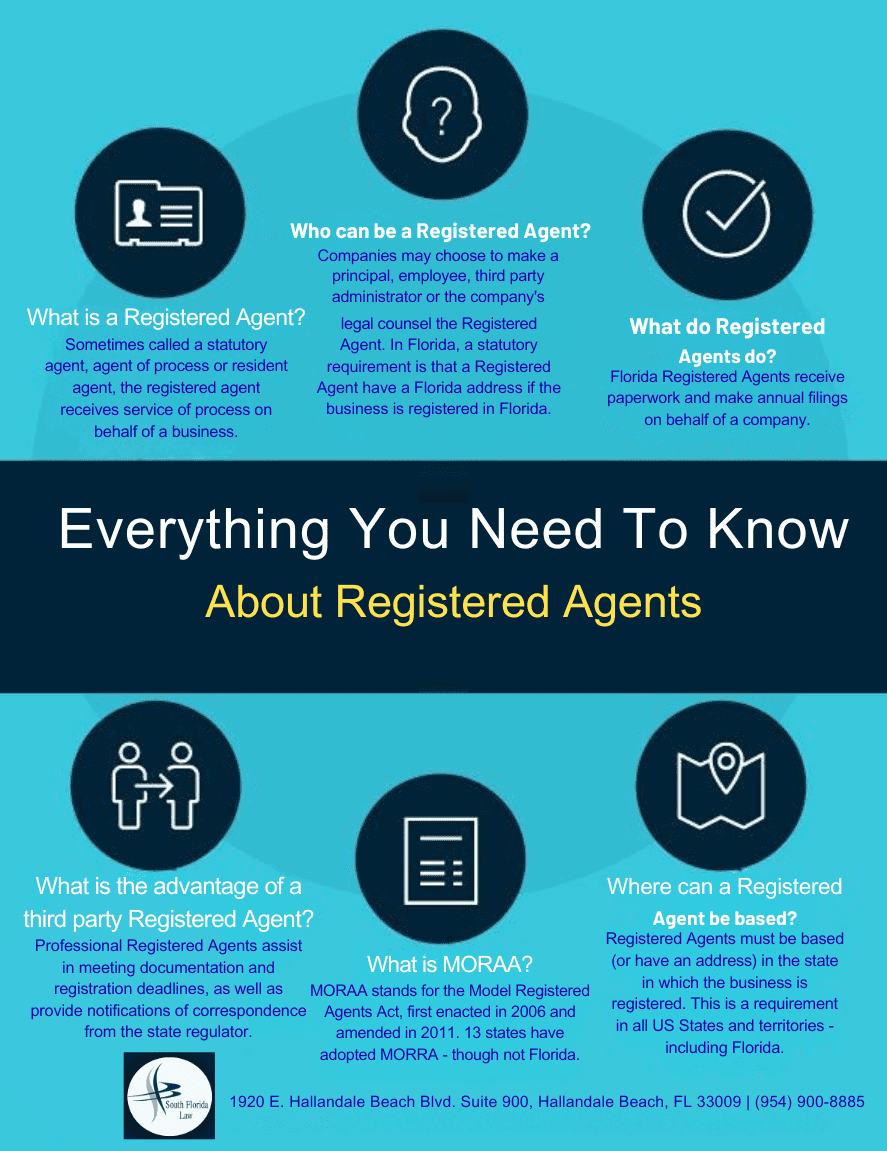
What is a Registered Agent?
Sometimes called a statutory agent, agent of process or resident agent, the registered agent receives service of process on behalf of a business.
They are also responsible for Florida State annual report filings.
Who can be a Registered Agent?
Companies may choose to make a principal, employee, third party administrator or the company’s legal counsel the Registered Agent. In Florida, a statutory requirement is that a Registered Agent have a Florida address if the business is registered in Florida.
What do Registered Agents do?
Florida Registered Agents receive paperwork and make annual filings on behalf of a company.
What is the advantage of using a third-parties?
Professional Registered Agents assist in meeting documentation and registration deadlines, as well as provide notifications of correspondence from the state regulator.
“A statutory requirement is that a Registered Agent have a Florida address if the business is registered in Florida.”
What does Florida statute say?
Registered Agents in Florida are governed by Florida Statutes 607.0501.
Where can a Registered Agent be based?
They must be based (or have an address) in the state in which the business is registered. This is a requirement in all US States and territories, including Florida.
The Importance of an Attorney
Working with an experienced Florida business attorney when registering your company provides invaluable guidance through the state’s specific filing requirements, ensuring formation documents are properly structured from the start. A knowledgeable attorney can help select the most advantageous entity type (whether LLC, corporation, or partnership) based on your liability exposure, tax considerations, and long-term business goals. Beyond initial formation, a good business attorney can serve as the company’s agent in Florida, providing a reliable professional address for service of process and ensuring critical legal notices or compliance deadlines are not missed. Your attorney can also draft or review essential governance documents like operating agreements and bylaws, helping prevent costly disputes among owners down the road. Perhaps most importantly, establishing a relationship with a trusted business attorney during formation means you’ll have a legal partner who understands your company’s foundation and can provide strategic counsel as your business grows and evolves.
South Florida Law
If you are considering opening a business in the State of Florida, turn to the experienced business attorneys of South Florida Law. South Florida Law has represented hundreds of businesses in Florida and has developed a track record of success working with business owners from out side of Florida who wish to open a business unit in the state.
Our attorneys are highly reviewed as we offer our clients the best of both worlds: the attention to deal of a boutique-sized firm with the resources of a large law firm.
Reach out to South Florida Law by calling (954) 900-8885 or via our contact form.