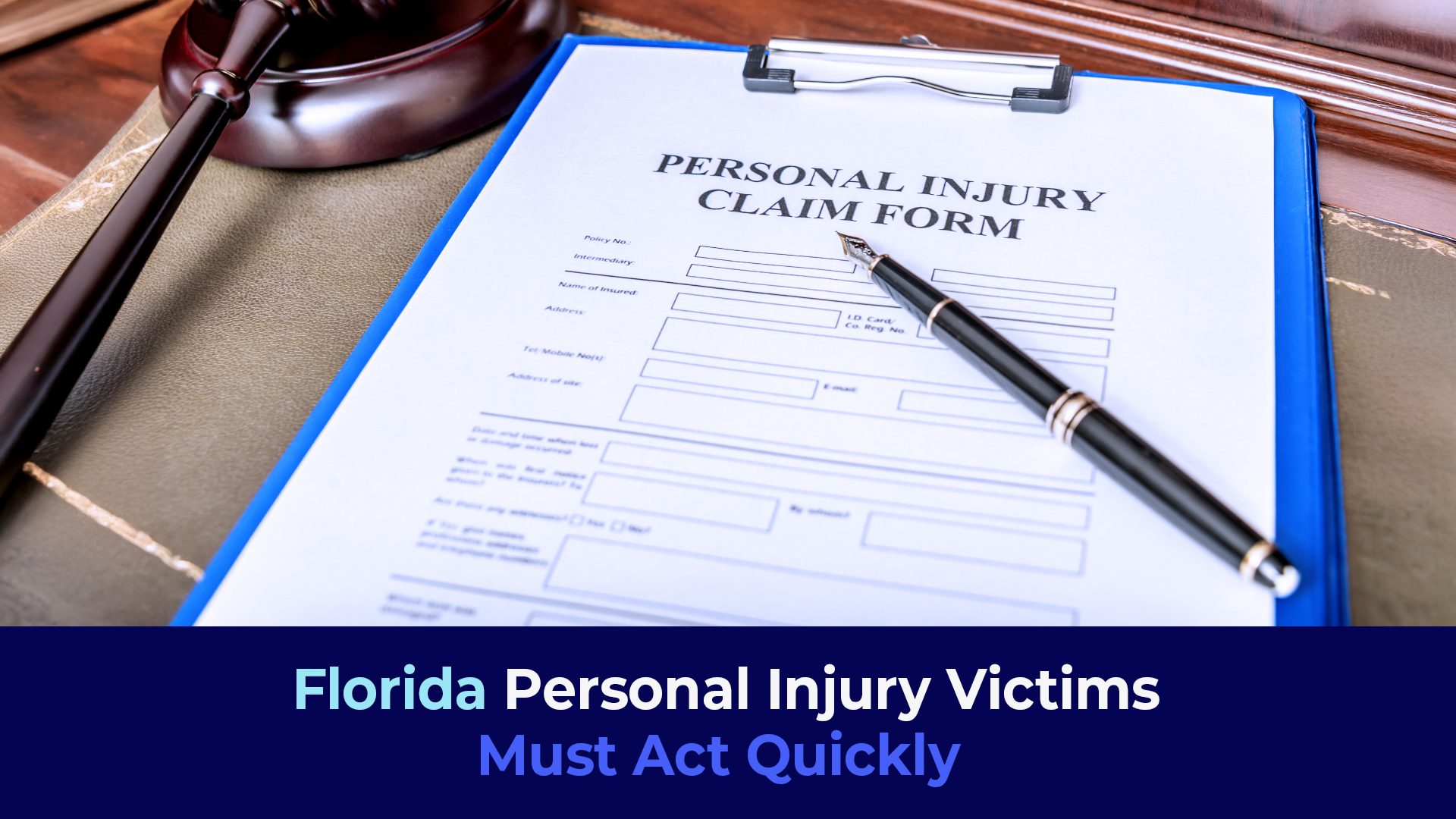
Florida Personal Injury Victims Must Act Quickly
After an accident, most injured people focus on getting medical care. But the choices made in the days and weeks after an injury can decide whether a victim recovers any compensation at all. Florida’s filing deadlines are shorter than many people realize, and key evidence starts disappearing almost at once.
Florida’s Two-Year Statute of Limitations
Most personal injury lawsuits in Florida must now be filed within two years of the date of the injury. This deadline, called the statute of limitations, is set by Section 95.11 of the Florida Statutes. A 2023 tort reform law, House Bill 837, cut the old four-year deadline for negligence claims in half.
The two-year rule applies to injuries that happened on or after March 24, 2023. That covers most car crashes, slip-and-fall accidents, dog bites and other claims based on carelessness. Injuries that happened before that date still fall under the old four-year deadline.
For example, a driver rear-ended on November 15, 2024 would generally need to file suit by November 15, 2026. A victim who still believes the old four-year rule applies could lose the claim entirely. Once the deadline passes, the case can be thrown out no matter how serious the injuries or how clear the other driver’s fault.
Some Claims Have Different Deadlines
Not every injury claim runs on the same clock:
- Medical malpractice: Two years from when the injury was discovered, or should have been discovered. In most cases, suit must be filed no later than four years after the incident itself.
- Wrongful death: Two years from the date of death.
- Claims against the government: Claims against a city, county or state agency fall under Section 768.28 of the Florida Statutes. That law requires written notice before a lawsuit and sets its own deadlines and damage limits.
A few narrow exceptions can pause or extend these deadlines, but victims should never assume one applies. Pinning down the correct deadline is one of the first things an experienced Florida personal injury attorney will do. For a closer look at each deadline, see Understanding Personal Injury Statute of Limitations in Florida.
Evidence and Medical Records Fade Fast
Deadlines are not the only reason to move quickly. Skid marks wash away, damaged vehicles get repaired, and security camera footage is often recorded over within days. Witnesses move and forget details.
Medical records matter just as much. Gaps in treatment give insurance companies room to argue that an injury happened later, came from an old condition or is less serious than claimed.
Car crash victims face one more clock. Under Florida’s no-fault law, Section 627.736, an injured person must receive initial medical care within 14 days of the crash to use Personal Injury Protection (PIP) benefits. Missing that window can mean losing PIP coverage.
Insurers Move Fast, and Fault Matters More Than Before
Insurance companies often begin working on a claim within hours of a serious accident. Adjusters may ask for recorded statements or offer a quick settlement before the full extent of an injury is known.
Those early conversations carry higher stakes since 2023. House Bill 837 also changed Florida’s comparative negligence rule in Section 768.81. Now, a person found more than 50 percent at fault for their own injury cannot recover any damages.
For example, a victim found 40 percent at fault can still recover, but the award is reduced by 40 percent. A victim found 51 percent at fault recovers nothing. An offhand remark to an adjuster can be used to shift more blame onto the victim. The 50 percent bar does not apply to medical malpractice cases.
Practical Steps After an Accident
- Get medical care right away, even for injuries that seem minor.
- Report the accident to police and get a copy of the report.
- Photograph the scene, the vehicles and any visible injuries.
- Collect names and phone numbers from witnesses.
- Notify the insurance company promptly.
- Speak with a personal injury attorney before giving a recorded statement.
- Follow all medical advice and keep every appointment.
South Florida Law
With a two-year filing deadline, a 14-day PIP window and evidence that fades quickly, time works against injury victims who try to go it alone. The personal injury attorneys at South Florida Law can identify the right deadline, preserve evidence and handle the insurance companies while victims focus on recovery. The firm handles personal injury cases on a contingency fee basis.
Anyone hurt by someone else’s negligence, or who has lost a loved one to a wrongful death, can call us at (954) 900-8885 or through our contact form.