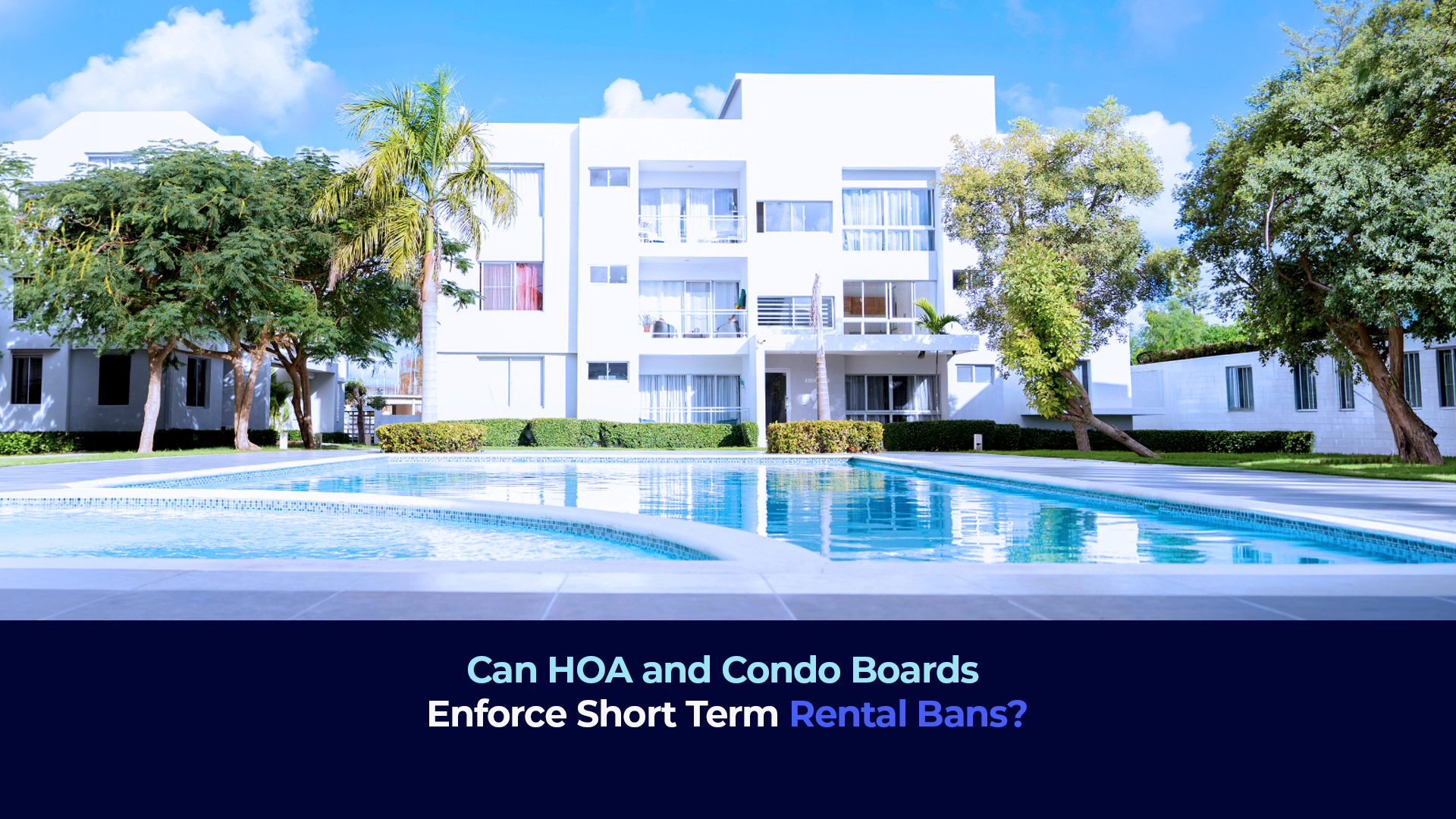
Can HOA and Condo Boards enforce short term rental bans?
Quick Read Summary (TLDR)
Under Florida law, retroactive short-term rental bans passed by HOAs or condominium boards after July 1, 2021, generally cannot be enforced against existing owners who do not consent to them. However, HOAs have a distinct advantage over condo boards because they can utilize statutory carve-outs to restrict rental terms under six months or limit rentals to three times a year for all owners. Because enforcing or challenging these restrictions heavily depends on precise timing, governing document language, and voting histories, consulting an experienced community association attorney is highly recommended.
Reach out for a consultation with an attorney at South Florida Law by calling (954) 900-8885 or via our contact form.
Short-term rentals through Airbnb and VRBO are a major source of income for many Florida property owners. As these rentals have grown, so have efforts by homeowners associations and condominium boards to restrict them. A common question is whether a board can retroactively ban a homeowner who purchased the property when no such restriction existed before. Florida statute provides a partial but important answer.
The General Rule for Florida HOAs
Florida’s Homeowners’ Association Act, found in Chapter 720 of the Florida Statutes, was amended in 2021 to add a new protection for parcel owners. Under Section 720.306(1)(h), any governing-document amendment adopted on or after July 1, 2021 that prohibits or regulates rental agreements applies only to two groups: parcel owners who acquire title after the amendment’s effective date, and parcel owners who consent to the amendment.
In practical terms, a Florida HOA that votes for a short-term rental ban after July 1, 2021 generally cannot enforce that rental ban against existing homeowners who did not vote for it. The statute also protects rental rights when title passes to an heir or to an entity affiliated with the prior owner; the new restriction does not attach until title is later transferred to an unaffiliated party.
Important Carve-Outs Under Chapter 720
The HOA limitation is not absolute. The same statute allows a homeowners association to amend its governing documents to regulate or prohibit rental agreements with terms of less than six months. It also permits associations to prohibit the rental of a parcel more than three times in a calendar year. Both types of amendments apply to all parcel owners, even those who purchased before adoption.
This carve-out is highly relevant to the short-term rental question. Most Airbnb and VRBO stays fall well below six months and often exceed three rentals per year, so an HOA that carefully drafts an amendment with a short-term rental ban stays may still reach existing homeowners.
“…a Florida HOA that votes for a short-term rental ban after July 1, 2021 generally cannot enforce that ban against existing homeowners who did not vote for it.”
The Rule for Florida Condominiums
For condominium associations, the controlling statute is Section 718.110(13) of the Florida Condominium Act. That provision states that any amendment prohibiting unit rentals, altering the duration of the rental term, or limiting the number of times a unit may be rented during a specified period applies only to unit owners who consent to the amendment and unit owners who acquire title after the amendment’s effective date.
The Condominium Act does not contain the six-month or three-times-per-year carve-out found in the HOA statute. As a result, a condominium board generally has a narrower path to restricting short-term rentals against pre-existing owners. A unit owner who purchased before the amendment and did not vote for it ordinarily keeps the rental rights that existed at the time of purchase.
Why the HOA Statute Reaches Further
The HOA statute is broader than the condominium statute because it restricts amendments that prohibit or regulate rental agreements. The condominium statute is narrower and addresses only outright prohibitions, changes to the rental term, and limits on the number of rentals. This distinction can matter when an association attempts to layer in registration fees, guest caps, or other secondary regulations on existing owners.
Restrictions Already in the Recorded Declaration
A separate issue arises when a rental restriction was already in the recorded declaration at the time of purchase. Florida courts have long recognized that recorded covenants place buyers on constructive notice. If a community’s declaration banned short-term rentals before a buyer took title, that restriction is generally enforceable regardless of when the buyer purchased. The protections discussed above apply to amendments, not to restrictions in place at the time of purchase.
The Importance of a Florida Attorney
Because rental disputes often turn on the timing of the amendment, the wording of the governing documents, and whether the owner voted in favor of the change, it is highly recommended that any homeowner facing a new rental restriction speak with an experienced Florida community-association attorney before listing a property or responding to a violation notice. Acting without legal guidance can expose a property owner to fines, liens, and litigation that may have been avoidable.
South Florida Law
South Florida Law is a larger-than-boutique Florida law firm with substantial experience guiding homeowners and associations through disputes involving Chapter 718 and Chapter 720 of the Florida Statutes.
With South Florida Law you get the best of both worlds: we offer the attention to detail of a smaller firm and the deep resources of a larger firm
The firm advises clients on the enforceability of rental amendments, voting procedures, and the practical impact of the 2021 HOA rental statute. If you are a homeowner or board member who needs clarity on your rights and obligations, call (954) 900-8885 or reach out through our contact form.