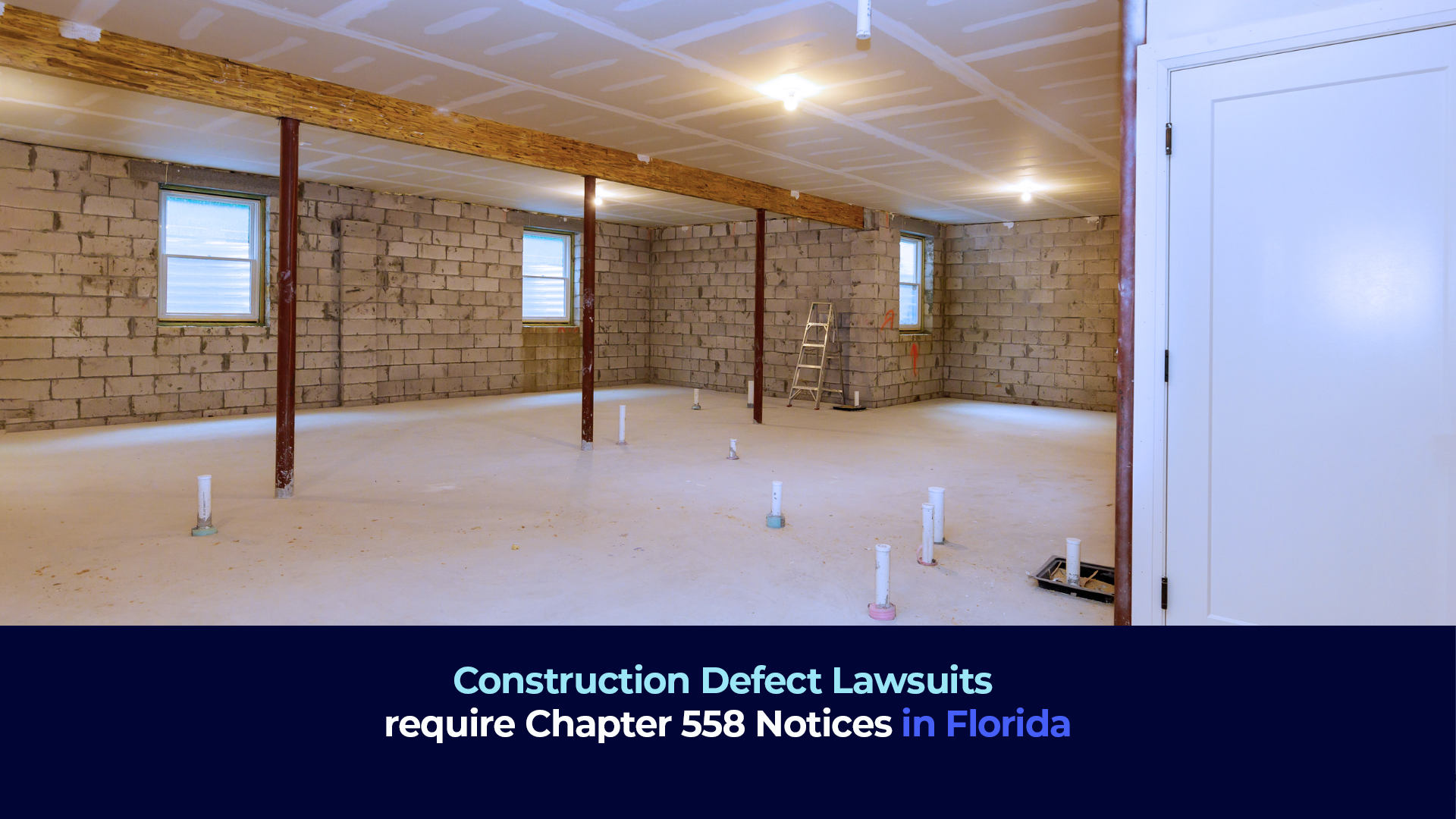
Construction Defect Lawsuits require Chapter 558 Notices in Florida
Quick Read Summary (TLDR)
Florida’s Chapter 558, known as the “Notice and Right to Cure” law, requires homeowners to send a written pre-suit notice detailing alleged construction defects to the responsible professional before filing a lawsuit. This statutory requirement is designed to reduce litigation by providing a structured process for the builder or contractor to inspect the property, exchange information, and propose a repair or settlement. Because specificity is critical, the notice must describe each alleged defect and be served at least 60 days before legal action; otherwise, the homeowner’s lawsuit risks being dismissed.
Reach out to South Florida Law for representation by calling (954) 900-8885 or via our contact form.
When a Florida homeowner discovers cracked stucco, a leaking roof, or other serious construction defects, the natural reaction is often to head straight to court. Florida law, however, requires a critical step first. Chapter 558 of the Florida Statutes, sometimes called the “Notice and Right to Cure” law, requires homeowners to send written pre-suit notice to the responsible builder, contractor, subcontractor, or design professional and give that party an opportunity to inspect and repair the alleged defects before a lawsuit may be filed.
The Purpose Behind Florida’s Chapter 558
The Florida Legislature enacted Chapter 558 to create an alternative method for resolving construction disputes outside of court. The stated goal is to reduce litigation while still protecting the rights of property owners. By requiring homeowners to put builders on written notice of alleged defects, the statute creates a structured opportunity to investigate the problem, exchange information, and discuss repair or settlement before incurring the expense and delay of a lawsuit. The process encourages early communication and gives construction professionals the chance to fix what they built before litigation begins.
What the 558 Notice Must Contain
Chapter 558 requires the homeowner (the “claimant”) to serve a written notice of claim that describes each alleged construction defect in reasonable detail. The notice must explain the nature of the defect and identify any resulting damage or loss, if known. Vague allegations often spark disputes about whether the notice was sufficient, so specificity is critical. For most single-family homes, the notice must be served at least 60 days before a lawsuit is filed. For homeowner or condominium associations representing more than 20 parcels, the pre-suit period extends to 120 days.
“Vague allegations often spark disputes about whether the notice was sufficient, so specificity is critical.”
The Builder’s Right to Inspect and Respond
After receiving the notice, the contractor or design professional has a statutory right to inspect the property and assess each alleged defect, then provide a written response. That response may offer to repair the defect at no cost, settle the claim with a monetary payment, propose a combination of both, or deny the claim entirely.
For example, if a homeowner serves notice about water intrusion through improperly installed windows, the contractor may inspect, agree the installation was defective, and offer to replace the windows at no charge. If the homeowner accepts and the work is properly completed, the dispute ends without litigation. If the offer is refused, the homeowner may then proceed to court.
Required Warning Language in Construction Contracts
Florida law also requires construction contracts for residential improvements to include specific statutory warning language. This warning alerts homeowners in capitalized letters that Chapter 558 contains important requirements that must be followed before any legal action for an alleged construction defect may be brought. It informs them they must deliver written notice 60 days before suing, and that the other party has the right to inspect and to consider making an offer to repair or pay. The Legislature included this warning to ensure homeowners learn about the pre-suit procedure long before a dispute arises.
Consequences of Skipping the 558 Notice
Failing to comply with Chapter 558 can derail a homeowner’s case. Courts have dismissed construction defect lawsuits when claimants file suit before satisfying the statutory notice requirement. Such dismissals are generally without prejudice, but the delay and added legal fees can be significant. Mishandling the 558 process may also strengthen the builder’s defenses and weaken the homeowner’s overall position.
Chapter 558 does not apply in every situation. Claims involving only personal injury, certain public-entity projects, and emergency repairs needed to protect health and safety may fall outside the statute. Because determining whether the 558 process applies can be complicated, it is highly recommended that homeowners consult an experienced Florida construction attorney as soon as a defect is suspected. A poorly drafted notice can delay a claim or limit available remedies, so working with counsel familiar with Chapter 558 is the safest path forward.
About South Florida Law
South Florida Law is a larger-than-boutique Florida law firm offering personalized representation across estate planning, probate, real estate, and related areas. The firm draws on extensive Florida experience to guide property owners through complex statutory procedures, including pre-suit notice requirements like those under Chapter 558.
Clients benefit from attentive, one-on-one service rather than the impersonal case handling common at larger firms. At the same time, clients benefit from South Florida Law’s extensive resources that go beyond those typically seen in smaller law firms.
If you are either a claimant property owner seeking damages or a construction contractor that just received a Chapter 558 Notice, contact us for representation. We can be reached at (954) 900-8885 or via our contact form.