Why a First Mortgage Survives an HOA Foreclosure Auction in Florida
Quick Read Summary (TLDR)
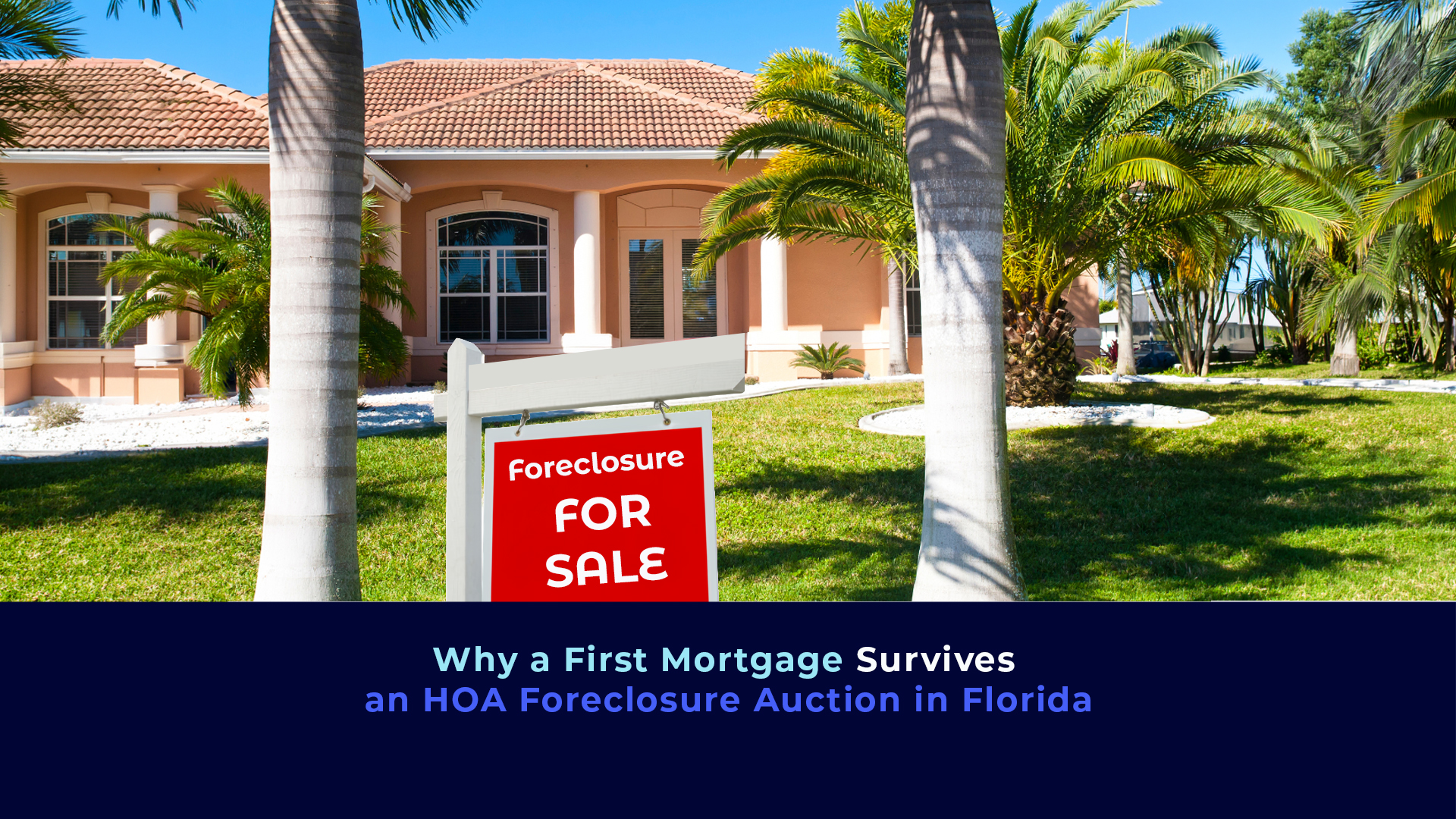
A homeowners association or HOA foreclosure auction can end with a winning bid of a few thousand dollars on a property worth far more. Investors new to these sales often read that low number as a sign of a clean transfer. In Florida, it signals the opposite. The mortgage that held first position before the auction still holds it afterward, and the winning bidder now owns a property securing a loan someone else signed. Understanding why, and why the rule differs from the law in other states, separates a calculated investment from an expensive lesson.
If you are considering a homeowners association or condominium association foreclosure auction, call us on (954) 900-8885 or reach out via our contact form.
How Florida Decides Which Lien Comes First
Florida Statutes Section 720.3085 gives a homeowners association a lien on each parcel to secure unpaid assessments. That lien generally relates back to the date the original declaration for the community was recorded, which is often decades in the past. The statute then carves out a critical exception. As to first mortgages of record, the association lien is effective only from the date the association records its claim of lien in the public records of the county where the parcel sits.
That exception decides nearly every case. A mortgage is normally recorded when the home is bought, years before any owner falls behind. The association’s claim of lien comes later, so the mortgage holds senior position, and foreclosing a junior lien cannot disturb a senior one. The auction transfers whatever interest the delinquent owner held, already burdened by the loan.
Florida Is Not a Super-Lien State
Much of the auction investing content online is written for a national audience, and this is where inexperienced bidders get into trouble. Several states grant association liens what is known as super priority. In those states, a set number of months of past due assessments rank ahead of even a first mortgage, and foreclosing that portion of the lien can eliminate the mortgage entirely. Nevada became the best known example and, although the related statute changed there in 2015, there is still considerable content on the internet that could misguide Florida investors who act on information related to other states.
Florida has never adopted super-lien language. No portion of a Florida association lien outranks a previously recorded first mortgage. An investor bidding on a Broward County parcel using assumptions borrowed from a super-lien state is relying on a rule that does not exist here. It is highly recommended that anyone entering a Florida auction confirm how lien priority works under Florida law rather than trusting general investing material.
“Florida has never adopted super-lien language.”
Safe Harbor Protects Lenders, Not Winning Bidders
The second surprise arrives from the association itself. Florida law caps what a first mortgage holder owes an association when that lender takes title through its own foreclosure. The cap is the lesser of twelve months of assessments that came due immediately before the lender acquired title, or one percent of the original mortgage debt. That protection is conditional, applying only where the lender sued the parcel owner and named the association as a defendant in the mortgage foreclosure action.
Nothing in that provision reaches a third party bidding at an association auction. The cap belongs to the mortgage holder and is triggered by a lawsuit the bidder never filed. The winning bidder instead falls under the general rule governing every owner, which brings liability for assessments coming due during ownership plus joint and several liability with the prior owner for amounts left unpaid before the transfer.
Condominium Auctions Follow a Parallel Track
Condominium associations operate under Florida Statutes Section 718.116 rather than Section 720.3085, and the two chapters are not interchangeable. This matters in South Florida, where condominium units make up a large share of auction inventory. Section 718.116 states directly that a unit owner is liable for assessments coming due during ownership regardless of how title was acquired, specifically including purchase at a foreclosure sale, and remains jointly and severally liable with the previous owner for amounts unpaid before transfer. The condominium safe harbor mirrors the homeowners association version and carries the same joinder requirement.
The Recorded Declaration Can Change the Answer
Statutes are not the only source of lien priority. Many Florida declarations contain their own subordination language, drafted to reassure lenders financing homes in the community. Florida courts have enforced that language where it is unambiguous, holding that a declaration subordinating association claims to a first mortgagee’s claim controls the result. Two properties in neighboring communities can therefore produce different outcomes on otherwise identical facts. An experienced Florida real estate attorney can read those provisions and explain what they mean for one specific parcel.
What the Winning Bidder Actually Owns
Taking title at an HOA foreclosure auction means owning the property subject to the mortgage, not assuming the loan. The borrower is still the person who signed the note. The new owner has no automatic right to make payments or request a modification, though many lenders will discuss a payoff figure once they learn ownership has changed. If the loan stays in default, the lender can foreclose, name the new owner as a defendant, and take the property. The auction price is not refunded, and money spent on repairs is rarely recovered.
Some experienced investors accept this exposure knowingly, targeting parcels with small remaining loan balances or collecting rent during the months before a lender acts. That is a deliberate strategy built on research, not a position an unprepared bidder wants to discover after the certificate of title has issued.
South Florida Law
Outcomes at Florida HOA foreclosure auctions turn on details that cannot be judged from a bidding calendar, including the recording sequence, the declaration language, and the status of the senior loan. Reviewing those items in advance costs far less than learning about them afterward.
South Florida Law represents property investors throughout Florida and is also a full-service title agency. We can review lien priority, association records, and governing documents before a client commits to a bid. If you are considering a homeowners association or condominium association foreclosure auction, call us on (954) 900-8885 or reach out via our contact form.